Warramiri Introduction:
Mä djanal ŋarru marŋgiyi ŋala djanaliŋgu ŋayi, ga ŋalaŋuru djanal.
Warramiri lands can be found between Gäwa 2 in the west, Martjanba in the north, Gäwa 1 in the south, Gulirr in the north-east and Maṯa maṯa in the east. All our land is precious; our heritage. Warramiri land is rich – we have many islands and mainland estates. Everyone has their own inheritance of Warramiri land that is passed on from generation to generation. It is very specific. Each piece of land has its own born or appointed leader and they work together. Land is so important because we draw everything from it, the songs and stories and language and relationships. If you don’t know your land heritage, you are lost.
MAP showing Warramiri places
Warramiri places have white markers. all the other places are Dhuwa places belonging to various clans.
Acknowledgements: Ian Morris with Barripaŋ, Liwukaŋ and Ḻirrwa
Here you can find information and learn about land. Land and Yolŋu are strongly connected, you came out of the land and you are part of the land, whatever you do the land knows you, like the smell of the land, you can feel it. When a stranger comes into the land the land smells you. You are not part of the family unless a Yolŋu wipes you with their buŋgan (scent) sweat, so then the land thinks you are part of the family. We do this to our babies before we go hunting. We give them our scent and tell them we are going to get food for them, its going to be fine we tell them, don’t cry. They stay behind with our scent until we get back from hunting, it’s a sort of blessing.
For Yolŋu people land is important, some places are sacred and you shouldn’t touch them. When you are hunting you only take what is useful, you don’t waste anything. You get to know the places and learn how often to visit or who to ask for permission to go there. The land has marks, streams, rocks and places on it that tell who it belongs to. Its something we need to teach our children. They are like signposts those signs are also in the songs, dances and paintings.
While each land has an owner, there are other relations to those owners who have a role to play in relation to that area, there are people with a caretaker roles. People who look after the law relating to that land.
Muthali dhuwa
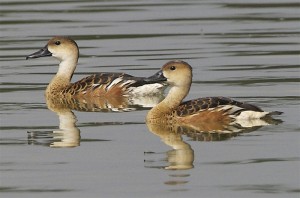 There is a story about ducks, a man and woman duck were travelling the country looking for food and a place to rest and hatch their eggs. They were eating räkay (bulbs of fresh water reeds), they didn’t take notice of the rain and the billabong filling with water. They looked to the different directions and couldn’t find a place to nest. They heard the sounds of the winds and waves coming up, this is when they turned into ducks and flew around and landed in different places and changed languages and finally landed on Cotton Island. They stopped there and laid their eggs. This is a place and a story (song and dance). They are in the care of the Warramiri who look after and it, the songs and dances connect many places and people.
The land and the water is all crisscrossed with stories like this, its like a weaving the land is woven together with the stories of all the clans that are living in Arnhemland.
Wulkurrŋu talking about connecting between Yolŋu and the land(23:41)